
Terracotta Temples of Bishnupur
The Heritage
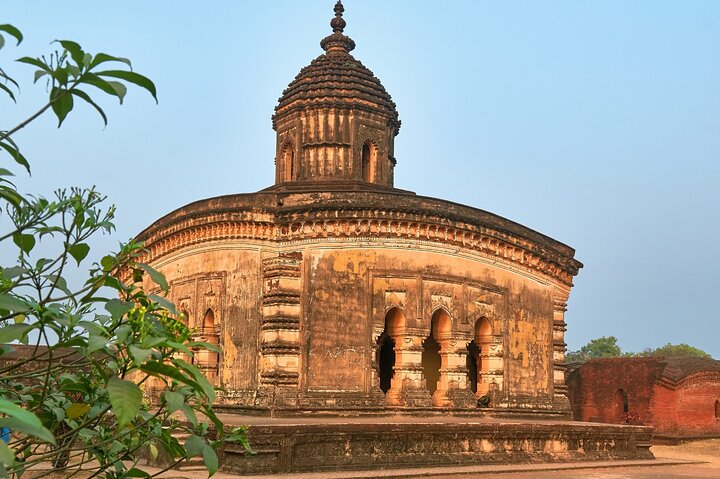
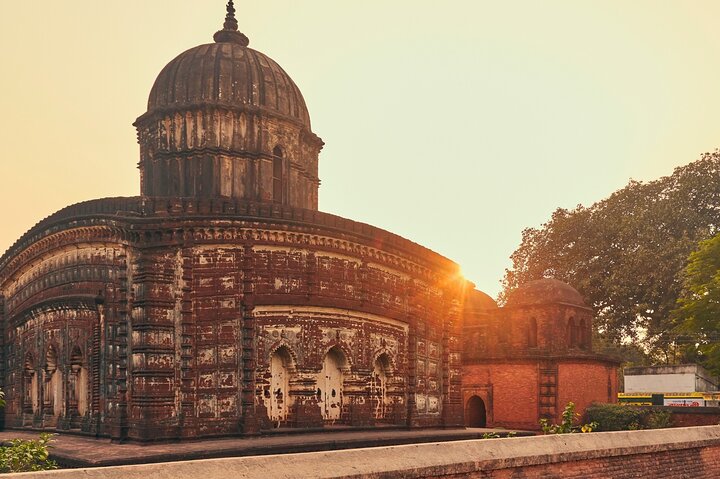
Bishnupur, a town in the Bankura district of West Bengal, stands as an extraordinary testament to the unique architectural and artistic prowess of the Malla kings. For nearly a thousand years, from the 7th to the 18th centuries, Bishnupur flourished as the capital of the Malla dynasty, who were devout Vaishnavites. It is renowned globally for its distinctive terracotta temples, built primarily in the 17th and 18th centuries using locally available laterite stone and baked clay tiles. The Malla rulers patronized a unique style of temple architecture, often characterized by "Chala" (huts with sloping roofs) and "Ratna" (pinnacled) styles, with intricate terracotta panels adorning every surface. These carvings depict mythological scenes from the Ramayana and Mahabharata, Krishna-Lila, daily life, and various flora and fauna, showcasing unparalleled craftsmanship.
Artistry in Clay
The terracotta temples of Bishnupur are not merely places of worship—they are open-air galleries showcasing Bengal’s unique artistic and architectural heritage. Each temple narrates stories from mythology, daily life, and folklore through intricate clay carvings.
Highlights of Terracotta Temples:
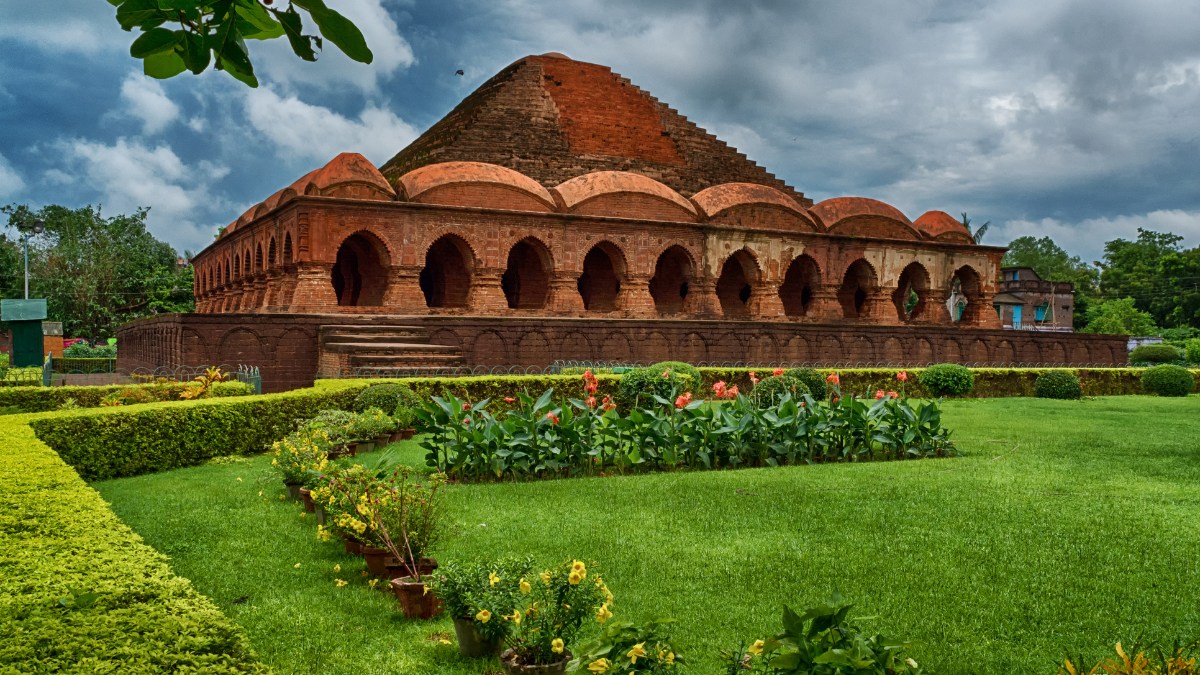
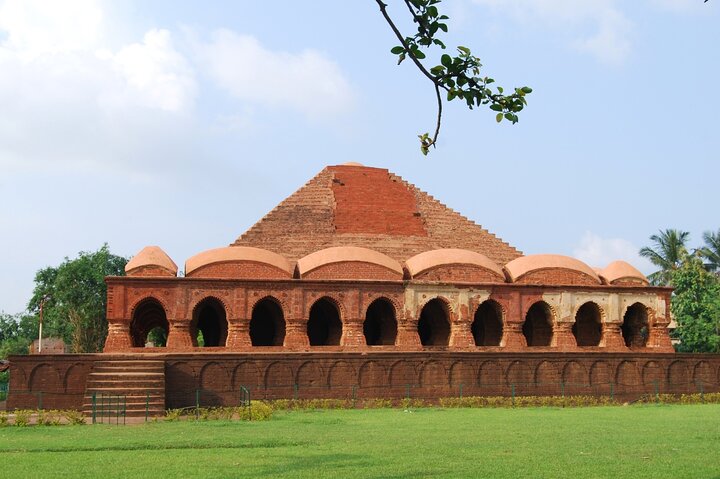
- Rasmancha (c. 1600 CE): The oldest brick temple in Bishnupur, noted for its unique pyramidal roof and three circumambulatory galleries.
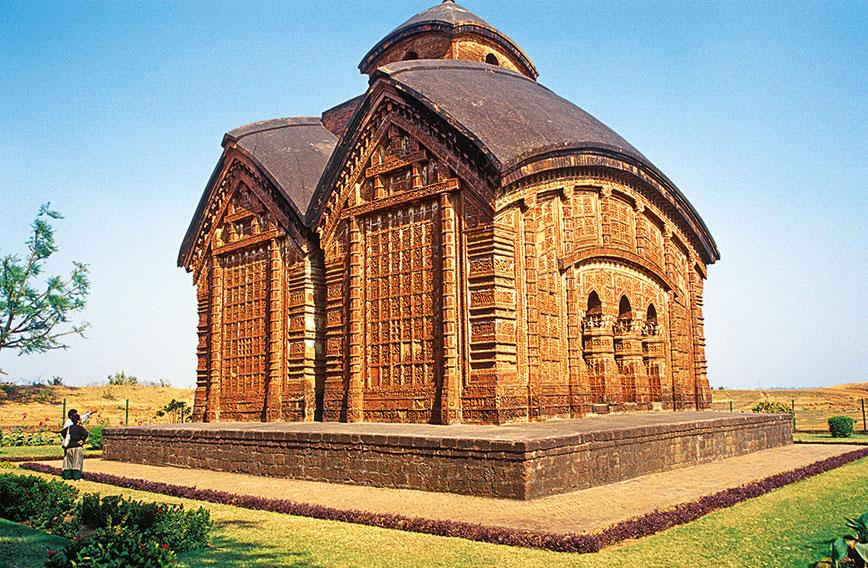
- Jorbangla Temple (Keshta Raya Temple, 1655 CE): Famous for its double-curved "do-chala" roof and terracotta panels depicting scenes from epics like the Ramayana and Mahabharata.
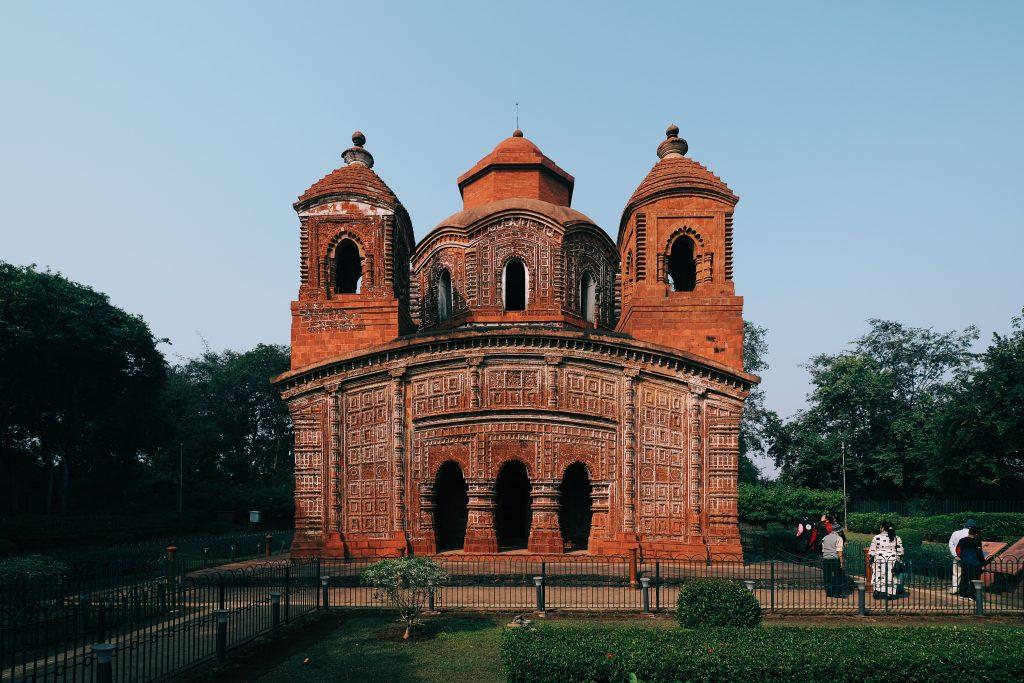
- Shyam Rai Temple (1643 CE): A stunning five-pinnacled (pancha-ratna) temple with richly decorated exterior terracotta panels.
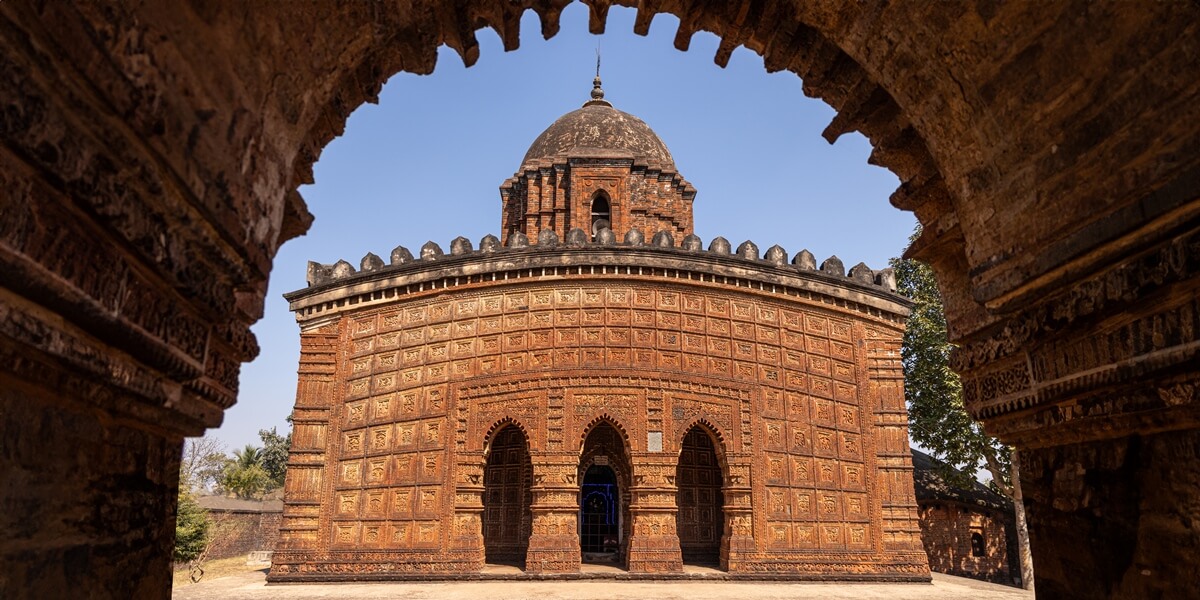
- Madan Mohan Temple (Late 17th century): A beautiful single-spired (eka-ratna) temple dedicated to Radha and Krishna with exceptional clay reliefs.
- Other notable temples include Lalji Temple, Radheshyam Temple, and Kalachand Temple, each adding to the town's charm and historic value.
Collectively, these temples represent the zenith of traditional Bengali temple architecture and stand as a testament to a once-thriving art form. Bishnupur is currently listed as a UNESCO World Heritage Tentative Site, marking its global cultural significance.
How to Reach
Bishnupur is conveniently accessible from Kolkata and other towns across West Bengal.
By Rail
- Bishnupur Railway Station (VSU) is well-connected to Kolkata (Howrah and Sealdah stations) and other major towns.
- Travel time from Kolkata is approximately 3.5–4 hours.
- Temples are mostly within walking distance or a short rickshaw ride from the station or town center.
By Road
- Distance from Kolkata: Around 150 km.
- Travel time: Approximately 3.5–4 hours via NH19, then branching off toward Bishnupur.
- Regular buses from Esplanade (Kolkata) and other districts are available.
By Air
- Nearest Airport: Netaji Subhas Chandra Bose International Airport (CCU), Kolkata.
- From the airport, travelers typically reach Bishnupur via train or road.
Local Transport
- The best way to explore the terracotta temples is by hiring a cycle-rickshaw or an auto-rickshaw for the day.
- Most temples are located within a compact area, making local travel convenient and enjoyable.
Visitor Reviews
Artistry Beyond Belief! by Dr. Rina Sen
The terracotta temples of Bishnupur are an absolute marvel! The intricate carvings on every single temple are breathtaking. It's like walking through an open-air museum where stories from epics come alive in clay. The craftsmanship is astounding. A truly unique and enriching cultural experience. Don't miss the Rasmancha and Jorbangla! Surprise
Visited in February 2025 with family
Interesting, But Can Be Repetitive by Indranil Goswami
The terracotta art is definitely unique and worth seeing. However, after visiting a few temples, they start to feel a bit similar in design and themes. It's better to go with a guide to understand the nuances, otherwise, it might feel a bit repetitive. Good for a half-day visit. Meh
Visited in February 2024 with friends
Overcrowded and Uncomfortable! by Sanjay Paul
My visit to Bishnupur was ruined by the sheer number of tourists. It was difficult to appreciate the delicate artwork with so many people pushing and shoving. The heat was also unbearable, and there were very few amenities. They need better crowd management and facilities for such a significant site. Frown
Visited in January 2025 with family